Poverty Is Not Failure, It Is a Crime of the System
Poverty Is Not Failure, It Is a Crime of the System
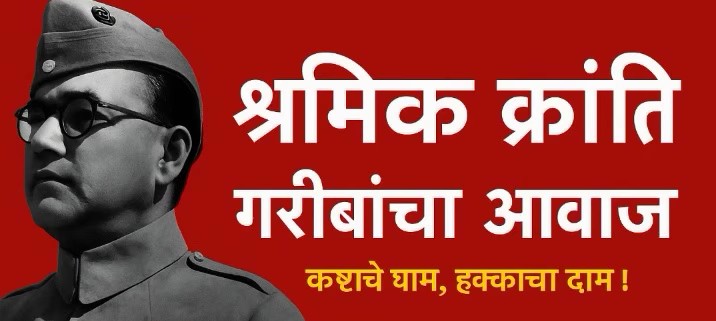
Shramik Kranti – Garibon Ka Aawaz
Is Merit Measured by Money or by Social Usefulness?
Money ≠ Merit; Usefulness = Merit
A dangerous and deceptive belief has become deeply rooted in modern society — that the person who earns more money is automatically more meritorious.
But is this really true? Or is it merely a convenient illusion implanted in our minds by the system?
Does a Field Become Useful Just Because It Generates Money?
In sectors such as business, industry, entertainment, and sports, some individuals have accumulated enormous wealth. As a result, they are widely labeled as “highly successful” and “exceptionally capable.”
For example, figures like Mukesh Ambani or Gautam Adani.
But a fundamental question must be asked — If these same individuals were working in agriculture or rural production, would they have been able to accumulate such vast wealth?
The answer is clear — No. Because here, merit is not decisive; the sector and the system are.
Does Wealth Come from Merit or from the System?
Three factors decisively influence income generation:
- Sector
- System (Policy, Market, State Support)
- Guarantees and Risk Protection
Industrialists become wealthy because:
- Their products receive assured procurement
- They receive tax concessions and subsidies
- They have access to loans, insurance, and legal protection
- The system minimizes their risk of loss
If farmers received guaranteed prices for their produce, and workers received fair wages for their labor, would they not become prosperous?
The answer is simple — It is not that they cannot become prosperous; they are simply not allowed to.
Who Is Truly Useful to Society?
What does society actually depend on?
- Food — Farmers
- Shelter — Construction workers
- Water, electricity, roads — Laborers
Without them, society cannot survive.
Cricketers, actors, and celebrities do provide entertainment, but entertainment is not a fundamental necessity.
Yet where does the money flow? Not to those who fulfill basic needs, but to those who entertain. Meanwhile, food producers face debt, humiliation, and even suicide.
This contradiction is not a failure of merit — it is a failure of the value system.
How Should Merit Be Measured?
Today we ask:
“How much does he earn?”
The real question should be:
“How essential is his work to society?”
If usefulness were the standard, farmers, workers, sanitation staff, nurses, and all other laboring people would be recognized as the most meritorious members of society.
The Moral Failure of a Money–Prestige Driven System
Even socially destructive and criminal economic activities generate enormous wealth. This reality exposes a grave defect in the system.
A system that rewards activities harmful to society while neglecting socially necessary labor is morally bankrupt.
A false yet widely accepted logic dominates social thinking:
Wealth = Success
Success = Intelligence
Intelligence = Leadership
Although flawed, this logic governs social behavior.
As a result:
- A person who earns money through criminal means is also labeled
- “Successful”, “Smart”, and “Powerful”
- Society bows before him instead of questioning him
Prestige is derived not from character, but from bank balance.
Money today is no longer merely economic power; it has become the primary source of social prestige and political influence.
Consequently, those who accumulate wealth through socially destructive or criminal activities also gain social legitimacy and political protection.
This is not a failure of individuals, but of a system that equates prestige with money.
In a system where socially useful labor has no dignity and profit outweighs ethics, democracy itself becomes a slave of economic power.
Poverty Is Not Failure — It Is Systemic Injustice
Poverty is:
- Not the result of laziness
- Not the result of lack of merit
Poverty is the product of an unjust economic and social system.
Therefore, wealth or poverty is not related to individual capability, but to the structure of the system itself.
A System That Measures Money by Merit Is Needed
The present system declares:
Where there is money, there is prestige.
The future system must declare:
Where there is usefulness, there must be money.
Instead of measuring merit by money, money must be measured by merit.
This alone is the true path to poverty eradication, the road to social justice, and the ideological foundation of the labor movement.
— Arun Ramchandra Pangarkar
Founder, Shramik Kranti | Garibon Ka Aawaz

Comments
Post a Comment
✊ आपले विचार खाली नोंदवा. श्रमिकांच्या हक्कासाठी एक विधायक विचारही परिवर्तन घडवू शकतो. सभ्य आणि विचारशील प्रतिक्रिया स्वागतार्ह आहेत.
✊ अपने विचार नीचे दर्ज करें। श्रमिकों के अधिकारों के लिए आपका एक सकारात्मक विचार भी परिवर्तन ला सकता है। शालीन और रचनात्मक टिप्पणियों का स्वागत है।
✊ Share your thoughts below. Even a single constructive idea can bring change for workers’ rights. Respectful and meaningful comments are always welcome.